
How Super Innovation Serves the Indian Railway Industry
Overview: The Casting Demand in Indian Railways
Indian Railways is one of the world's largest railway networks, operating over 13,000 passenger trains and 9,000 freight trains daily. Behind this massive operation is an equally large supply chain for components — from structural steel to precision aluminium castings.
Aluminium casting demand from the railway sector has grown significantly over the past decade as Indian Railways modernised its rolling stock and signalling infrastructure. Lighter aluminium components replace steel in non-structural applications, reducing weight and improving energy efficiency.
Railway suppliers — the tier-1 and tier-2 companies supplying to RDSO-approved channels, coach factories, and metro rail projects — depend on precise casting moulds to meet stringent quality and dimensional standards.
Types of Aluminium Railway Parts We Support
At Super Innovation, we manufacture casting patterns and GDC moulds for these categories of railway aluminium parts:
Brake System Components: Brake rigging brackets, slack adjuster housings, and bogie brake assembly components. These parts require high dimensional accuracy and must meet RDSO strength specifications.
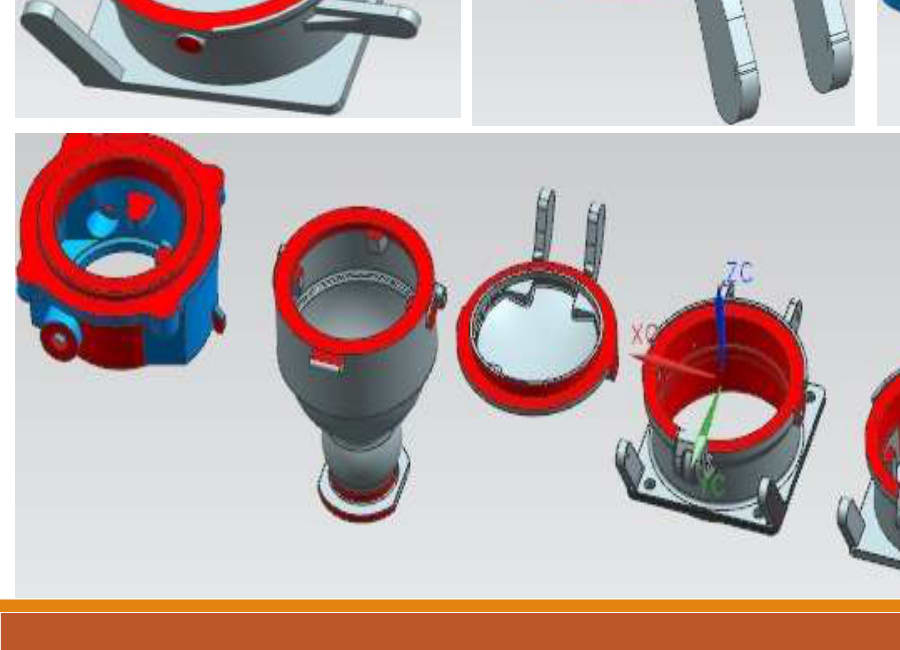
Electrical and Signal Housings: Junction boxes, signal lamp housings, relay covers, and electrical enclosure bodies. Watertight construction with O-ring grooves and cable entry provisions are typical requirements.
Connector Bodies and Terminals: Aluminium connector housings for power and signal cables. Complex internal profiles with multiple chambers and partition walls.
Swivel Hub Castings: Used in bogie assemblies for articulation. Aluminium swivel hubs reduce unsprung weight compared to steel. Dimensional accuracy is critical for interference fit with steel axle components.
Bogie Frame Sub-Components: Mounting brackets, suspension end-stops, and bogie bolster components in aluminium.
The GDC Process: Why It Suits Railway Parts
Gravity Die Casting (GDC) is the process of choice for most aluminium railway components. In GDC, molten aluminium is poured by gravity into a permanent steel or cast iron mould — unlike sand casting, which uses a disposable sand mould.
Why GDC for railway parts?
Better surface finish: GDC produces smoother surfaces than sand casting — typically Ra 3.2 to 6.3 compared to Ra 12.5+ for sand casting. This is important for mating surfaces and sealing faces.
Tighter tolerances: GDC typically achieves IT8–IT10 tolerances compared to IT11–IT13 for sand casting.
Better mechanical properties: The permanent mould promotes faster cooling and finer grain structure, improving strength and fatigue resistance — important for bogie components.
Lower volume economics: GDC becomes economical from around 500 to 50,000 parts per year — exactly the range most railway component suppliers operate in.
Our CAD/CAM Approach: 2D Drawing to 3D Model to Machined Mould
Railway component suppliers often work from RDSO-issued 2D drawings or from proprietary designs. Our process:
Projects: Swivel Hub, Connector Bodies, Signal Housings
Swivel Hub Pattern — DISA Line: One of our notable railway projects was a precision swivel hub casting for an Indian Railways bogie assembly. The component had no drawings — we reverse-engineered from the original German-made part using dimensional measurement. The HPML match plate we manufactured achieved ±0.003mm casting accuracy. The client received RDSO approval on first submission.
Signal Housing GDC Mould: A railway signalling supplier needed an aluminium GDC mould for a watertight signal housing. The mould included O-ring grooves, conduit entry ports, and a multi-piece slide for the cable entry undercut. Our mould delivered defect-free castings on first trial. The casting passed IP66 rating testing.
Connector Body Core Box: Complex aluminium connector bodies with internal multi-chamber profiles required precise shell core boxes. We manufactured matched shell core boxes in machined aluminium, compatible with the client's VEE-PEE core shooter.
Quality and Precision for Railway-Grade Components
Railway casting moulds require extra attention to:
- Watertight mould construction (O-ring sealed mould halves)
- RDSO-compatible documentation (drawing numbers, revision status)
- Material certification for mould steel
- First-off dimensional reports
- Trial casting records
We maintain full documentation and provide dimensional inspection reports with every mould delivery.
Partnering with Super Innovation
If you supply railway components and need precision GDC moulds or HPML patterns, we welcome enquiries from RDSO-approved suppliers and tier-2 vendors. Call Santosh Kumar at 9718809475, share your drawing, and we'll provide a technical review and quotation within 48 hours.