
Shell Core Box vs Cold Core Box: Choosing the Right Process
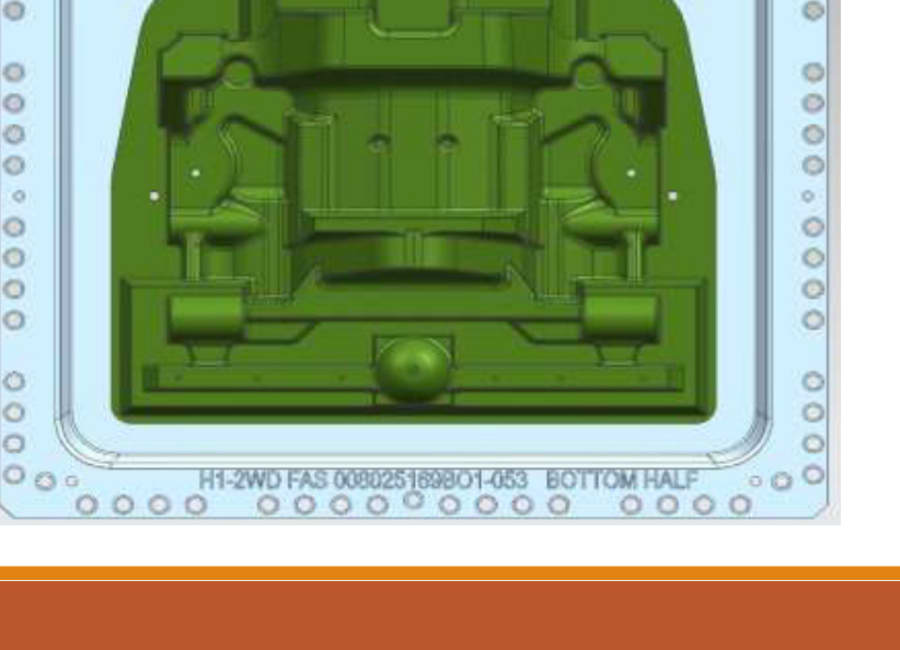
What Is a Core Box and Its Role in Sand Casting
In sand casting, a core is a sand shape placed inside the mould to create internal cavities, holes, and undercuts in the casting — features that cannot be formed by the pattern alone. A core box is the tool used to make cores. Think of it as a mould for making sand shapes.
Core boxes are critical in complex castings: engine manifolds with internal gas passages, pump bodies with internal water chambers, gearbox housings with internal gear compartments, and pipe fittings with through-holes.
The two dominant core box processes in India's foundry industry are shell core and cold core (also called isocure or no-bake). Each has distinct advantages, and choosing the right process for your application can significantly impact cost, quality, and cycle time.
Shell Core Box: Process and Advantages
Shell core making uses a heated metal core box (typically cast iron or aluminium) and a phenolic resin-coated sand mixture. The process:
Advantages of shell core:
- Excellent dimensional accuracy and repeatability
- Smooth core surface → smooth casting interior surface
- Fast cycle time (15–60 seconds per core)
- High core strength, handles well without breakage
- Ideal for high-volume production
- Compatible with automated core making machines
Materials: Shell core boxes are typically cast iron or machined aluminium. At Super Innovation, we machine shell core boxes from solid aluminium or cast iron, with polished core cavity surfaces to Ra 1.6 or better.
Compatible machines: CFM, VEE-PEE, SUSHA, and similar shell core shooters operating at 120–200°C.
Cold Core Box (Isocure/No-Bake): Process and Advantages
Cold core (also called isocure, pep-set, or no-bake) uses a chemical binder system that cures at room temperature — no heat required. The process:
Advantages of cold core:
- No heating equipment needed — lower capital cost
- Ideal for large, complex cores where shell process is impractical
- Multiple cores can be made simultaneously
- Core boxes can be made from wood, MDF, or aluminium (lower tooling cost)
- Better for complex internal shapes with undercuts
- Longer cure time allows adjustment and re-packing if needed
Materials: MDF (medium-density fibreboard) is common for low-volume and prototype cold core boxes. For production volumes, machined aluminium provides better dimensional stability and surface finish.
Compatible systems: SPAN MAKWELL, VEE-PEE cold box, general no-bake systems using furan or phenolic urethane binders.
CO2 Core Box and Manual Core Box
CO2 process: Uses sodium silicate binder. CO2 gas is passed through the packed sand to cure it. Slower and gives softer cores than isocure, but is very economical and uses simple equipment. Best for low-volume, large cores in smaller foundries.
Manual core box: Simple wooden or aluminium split boxes where sand is hand-rammed. Used for single-piece or very low-volume prototype production. No precision, but very cheap.
Super Innovation's Expertise Across All Types
At Super Innovation, we have manufactured core boxes for all major Indian core making machines:
- CFM (shell core, imported)
- VEE-PEE (shell core and cold core)
- SUSHA (shell core)
- SPAN MAKWELL (cold core / isocure)
Our CAD/CAM capability allows complex curved profiles, ejector pin systems, and precision parting lines — critical for cores that must meet casting dimensional requirements.
Decision Matrix: When to Use Which Process
| Factor | Shell Core | Cold Core | CO2 Core |
| -------- | ----------- | ----------- | ---------- |
| Volume | High (>500/month) | Medium-Low | Low |
| Core Size | Small-Medium | Any | Any |
| Dimensional Accuracy | Excellent | Good | Moderate |
| Surface Finish | Excellent | Good | Moderate |
| Tooling Cost | Higher | Medium | Low |
| Cycle Time | Fast (30s) | Slow (15min) | Slow (30min) |
| Equipment Cost | Higher | Lower | Lowest |
Cost and Lead Time
Shell core boxes take longer to manufacture (more precise machining, polishing required) and cost more upfront. But the per-core production cost is low at high volume.
Cold core boxes are cheaper to make (MDF or simpler aluminium construction) but per-core production cost is higher due to longer cycle time and binder material cost.
For guidance on which process suits your casting requirements, contact Super Innovation: 9718809475.