
Reverse Engineering in Pattern Making: Bringing Old Patterns Back to Life
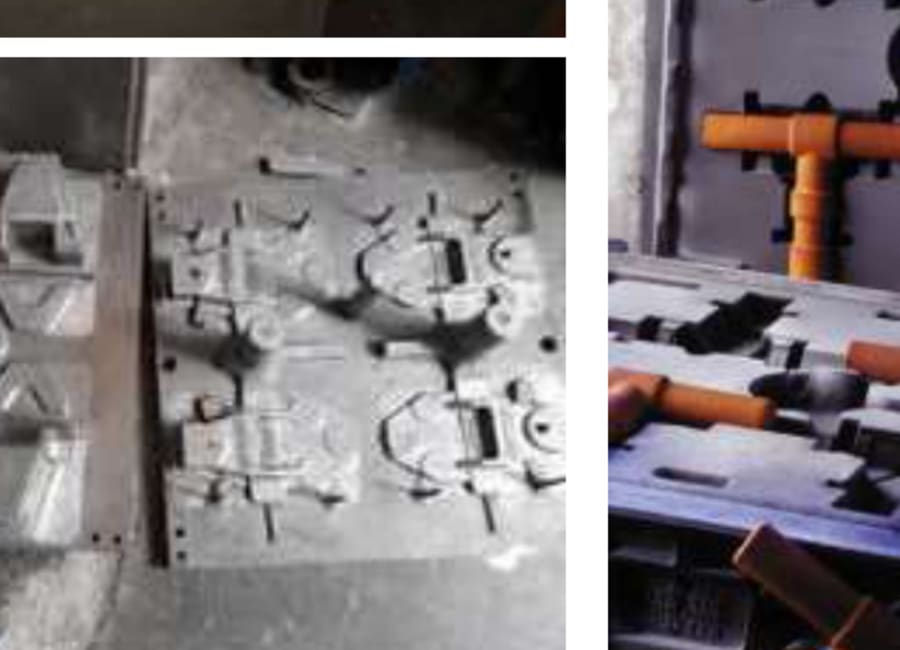
What Reverse Engineering Means in Pattern Making
Reverse engineering in pattern making is the process of creating a new pattern or mould from a physical component — without original drawings. You start with the end product (the casting or the existing worn pattern) and work backward to create the tooling that produces it.
This is more common than many people realise. India has thousands of foundries that have been operating for 30–50 years. Patterns from that era were hand-made from manual drawings, many of which no longer exist. Customers imported machinery from Germany, Japan, or the UK decades ago, and the tooling drawings were never obtained. Agricultural equipment designed in the 1970s still sells, but the pattern is worn beyond usable life.
In all these cases, reverse engineering is not just the best option — it is the only option.
When Is Reverse Engineering Needed
Worn or damaged pattern: The original pattern has been used for 10–20 years and dimensional accuracy has degraded beyond acceptable limits. No original drawing exists for reproduction.
Lost drawings: The engineering drawings for a component were never stored properly and are now unavailable. The casting still needs to be produced.
Obsolete or imported components: Parts from foreign machinery that was never supported locally. The manufacturer no longer supplies spares, but the machine is still operational.
Competitor part matching: A foundry client needs to match an existing part from a competitor's component. They provide the actual component and need casting tooling to produce an equivalent.
Upgrade with minor changes: The original pattern exists, but the customer wants minor design modifications. Reverse engineering the current pattern allows us to update the model and machine a new one with changes incorporated.
Our Reverse Engineering Process
Step 1: Physical measurement
We receive the physical casting or worn pattern. Our measurement team uses precision instruments:
- Vernier calipers and micrometers for linear dimensions
- Height gauges for step heights
- Radius gauges for fillet radii
- Dial test indicators on surface plates for flatness
- Roundness testing for bores and journals
For complex 3D profiles, we use CMM (Coordinate Measuring Machine) point scanning, building a point cloud from which the 3D surface is reconstructed. For very complex organic shapes, photogrammetry or structured light scanning may be used.
Step 2: Dimension analysis
Measured dimensions must be interpreted carefully. The physical part is a casting — it already has:
- Shrinkage applied (needs to be "grown back" for the pattern)
- Machining stock removed (original cast surface dimensions needed)
- Possible wear or distortion from use
Our experienced team identifies which dimensions are the "as-cast" reference and calculates the original pattern dimensions accordingly.
Step 3: 3D CAD modelling
Dimensions are transferred to 3D CAD software. Our modellers create a solid model of the pattern. For patterns with complex profiles, this step is the most time-intensive — building surfaces that match the measurement data while creating a clean, manufacturable 3D model.
When we have a casting rather than a pattern, we also add:
- Shrinkage allowance (casting is smaller than pattern)
- Draft angles (if they were lost in casting/machining)
- Pattern features (gates, parting line features, reference surfaces)
The 3D model is reviewed against the measurements. Key dimensions are extracted from the CAD model and verified against the measured data. Deviations exceeding tolerance are corrected.
Step 5: CAM programming and VMC machining
With an approved 3D model, the process follows our standard pattern making workflow: CAM toolpath generation, VMC machining, inspection, finishing.
Step 6: Trial casting
For any reverse-engineered pattern or mould, a trial casting is mandatory. The trial casting is compared against the original component or drawing specification. Any corrections are made to the model and machining, and a second trial is conducted.
Software Used
- 3D CAD: SolidWorks, AutoCAD (2D to 3D conversion)
- CAM: Mastercam, PowerMill (toolpath generation)
- Measurement: CMM point scanning, manual probing
Applications
Old foundry patterns: We have reproduced patterns originally made in the 1970s and 1980s for grey iron casting foundries. Several of these patterns had no drawings — only the physical worn pattern as reference.
German/Japanese machine parts: Imported industrial machinery from the 1980s–90s often has cast aluminium or grey iron housings that need replacement. We reverse engineer from the physical part.
Agriculture machinery: Indian and imported tractor and implement components. Gearbox housings, pump bodies, and hydraulic valve bodies are common requests.
Pump housings: Centrifugal pump casings and impellers where the original foundry pattern was lost or where production has shifted to a new foundry that needs new tooling.
Cost vs. Buying New
Reverse engineering a pattern is typically cheaper and faster than designing a new component from scratch. The "design" is already defined by the physical part — only the measurement and modelling work is additional compared to manufacturing from a drawing.
For components that are no longer manufactured by the OEM, reverse engineering is often the only cost-effective option, with typical savings of 40–60% compared to redesign.
Case Examples
40-year-old pump pattern recreated: A pump manufacturer in NCR approached us with a worn pattern for a centrifugal pump body that had been in production since 1978. No drawings existed. We measured the pattern, modelled it in 3D, machined a new shell core box and GDC mould, and produced dimensionally accurate replacement patterns. The customer resumed full production within 6 weeks.
Railway part replacement: An Indian Railways maintenance depot needed cast aluminium swivel hubs for older rolling stock. The component manufacturer was no longer active. We reverse-engineered from the original component, manufactured HPML patterns, and supported the foundry in producing replacement castings. RDSO dimensional acceptance was achieved on first submission.
Contact Super Innovation: 9718809475 | superinnovation913@gmail.com