
Aluminium Gravity Die Casting (GDC) Moulds: Design & Manufacturing
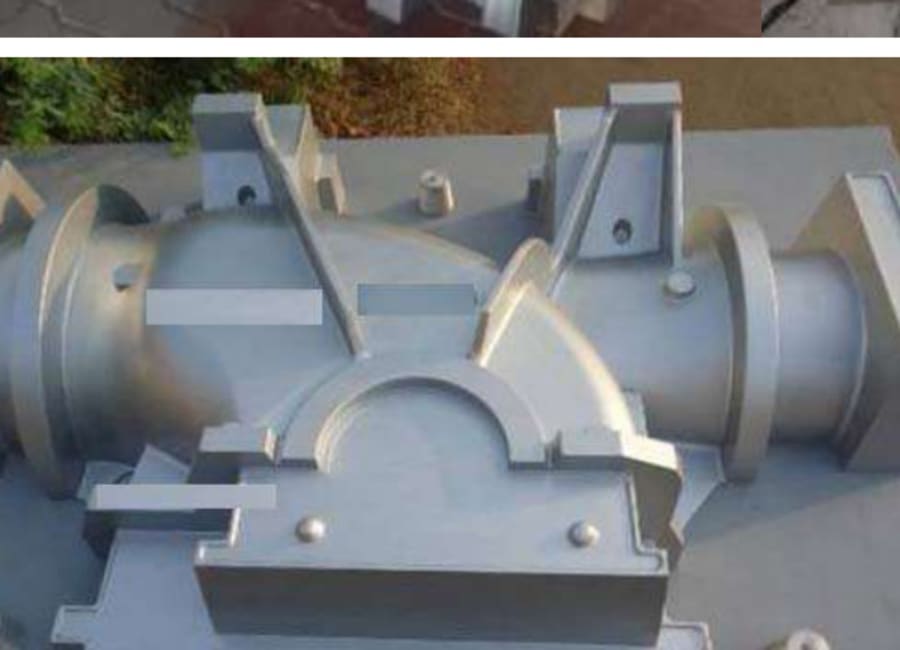
What Is Gravity Die Casting and Where It's Used
Gravity Die Casting (GDC) — also called permanent mould casting — uses a reusable metal mould (typically cast iron or steel) into which molten aluminium is poured under gravity. Unlike sand casting (single-use moulds) and pressure die casting (requires expensive high-pressure machines), GDC strikes a balance: reusable moulds, no high-pressure equipment, and better casting quality than sand.
Where GDC is used in India:
- Pump bodies, impellers, and casings (dominant application)
- Automotive: cylinder heads, rocker covers, inlet manifolds
- Railway: swivel hubs, signal housings, connector bodies
- Electrical: motor end shields, fan housings, terminal boxes
- General: hydraulic valve bodies, compressor bodies, instrument housings
GDC is economical for production runs from ~500 to ~100,000 parts per year. Below 500 parts, sand casting is typically cheaper (no mould cost). Above 100,000 parts, pressure die casting may be cost-effective despite higher machine investment.
Key Design Considerations
Draft angles: All surfaces parallel to the mould opening direction require draft to allow the casting to strip from the mould without damage. Standard GDC draft angles:
- External surfaces: 2–4° (higher for deeper features)
- Internal surfaces and core pins: 3–5°
- For aluminium alloys: slightly higher than for zinc or magnesium
- A380 (most common die casting alloy): 1.2–1.4%
- A413: 1.0–1.2%
- LM6 (Al-Si 12%): 1.2–1.3%
The mould cavity must be machined oversize by this percentage to produce a correctly sized casting.
Gating system: GDC relies on gravity flow, so gating must be designed for smooth, turbulence-free fill. Common designs:
- Bottom gate (best for quality, minimises turbulence)
- Side gate (easy to remove, common for simple shapes)
- Top gate (only for simple flat castings, creates turbulence)
- A well-designed gate fills the cavity in 5–15 seconds
Cooling channels: Drilled or cast channels in the mould body carry water or compressed air for controlled cooling. Faster cooling improves grain structure and mechanical properties. Cooling channels must be placed to avoid hot spots (thick sections) and prevent premature solidification of the gate.
Venting: Aluminium GDC at ~720°C generates significant gas from the casting. Vent slots (0.1–0.15mm deep, machined at parting line and overflows) must be placed at every trapped air location.
Material Selection
H13 hot work tool steel: The premium choice for GDC moulds. H13 offers:
- Excellent thermal fatigue resistance (resists heat checking)
- Good hardness at elevated temperature
- Available as prehardened (40–44 HRC) or soft annealed
- Mould life: 50,000–200,000 shots for aluminium
- Suitable for all aluminium alloys and moderate to high production volumes
Graded iron (cast iron): Used for simple-shape moulds at low production volumes. Good thermal conductivity, easy to repair by welding. Not suitable for moulds requiring tight tolerances.
Our Manufacturing Process
Common Defects and How Mould Design Prevents Them
Porosity: Caused by trapped gas. Prevention: adequate venting, controlled fill speed, proper overflow well design.
Cold shut / misrun: Caused by metal solidifying before filling the cavity. Prevention: increase gate cross-section, preheat mould to 200–250°C before pouring, adjust alloy temperature.
Shrinkage void: Hot spots in thick sections cool last and shrink. Prevention: cooling channels at thick sections, feeders/risers for isolated thick areas.
Heat checking (mould cracking): Thermal fatigue from rapid heating/cooling cycles. Prevention: H13 steel, adequate mould preheating, avoid quenching hot moulds.
Sticking/scoring: Aluminium adhering to the mould surface. Prevention: adequate draft angles, die release coating (boron nitride spray), correct mould temperature.
How to Submit Your Drawing for a GDC Mould Quotation
We will provide a detailed quotation including mould design approach, material recommendation, and lead time. Contact: 9718809475 | superinnovation913@gmail.com